Agents that do real work, and show their work.
AI agents that act inside your systems, on governed data, with tests, permissions, and a human in the loop.

What gets in the way
A demo chatbot takes an afternoon. An agent your auditors and customers can trust takes engineering.
Without evaluation, nobody knows how often the agent is wrong until a customer finds out.
Without tool permissions and logs, agents can reach data and actions they should not.
Without a clear job, agents sprawl. They try to do everything, so nobody can say whether they work.
What we measure: task success rate on a test set, escalation rate to humans, cost per task, and response time.
One job, measured, with a person in charge
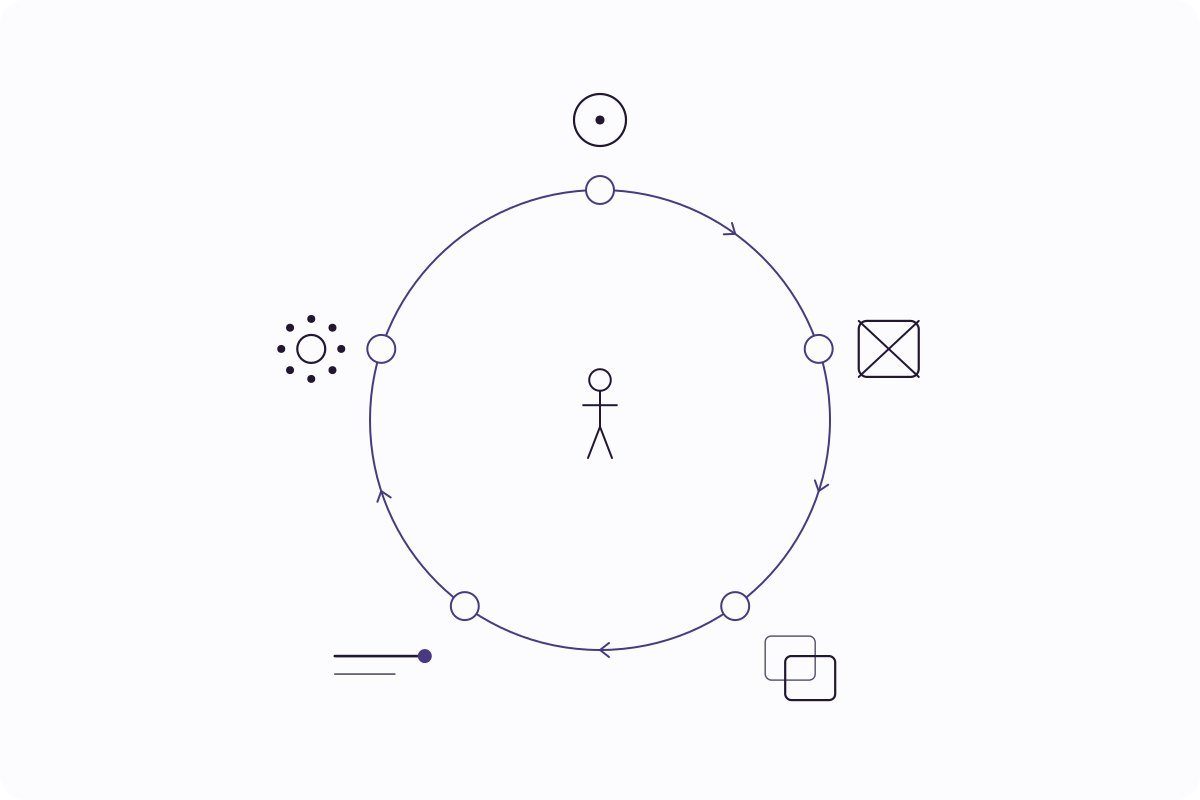
We pick one job with a clear owner, clear inputs, and a result you can count: tickets resolved, documents drafted, exceptions cleared.
The agent starts as an assistant. It drafts and a person approves. As test scores hold up, you decide what it can do alone. Anything that moves money, changes a contract, or contacts a customer can always require approval.
You get a weekly scorecard: tasks done, success rate, escalations, and cost. If it is not paying off, you see that early.
Signs you need it
Skilled people on copy-paste
Your best staff spend hours moving data between email, PDFs, and systems.
A pilot that stalled
You built a chatbot demo, and it never made it past legal, IT, or the first wrong answer.
A queue that keeps growing
Requests, exceptions, or documents pile up faster than the team can clear them.
Auditors ask how
You need to show who or what touched a record, and why.
Deliverables
One production agent for a defined job: answer customers, route requests, draft documents, or reconcile records.
Tools wired to your systems with least-privilege permissions.
An evaluation set and automated scoring, with tracing on each step the agent took.
Guardrails, human review steps, and full action logs.
Monitoring for quality, cost, and drift after launch.
Steps
Choose
Pick one job with clear inputs, outputs, and a measurable result.
Build
Ground the agent in your lakehouse data and connect its tools.
Test
Score it against real cases before anyone relies on it.
Launch
Start with human review, then widen as scores hold.
What runs under the hood
Grounding. The agent reads from governed tables and indexed documents in your lakehouse, so answers trace back to a source.
Tools. Each action (look up an order, update a status, draft a reply) is a narrow function with its own service account and least-privilege access. Tools can be exposed over the Model Context Protocol (MCP).
Evaluation. A test set built from your real past cases, scored automatically on every change. Tracing records each step the agent took.
Controls. Input and output guardrails, approval steps for risky actions, rate and cost limits, and production monitoring on a sample of live traffic. We design against the OWASP Top 10 for LLM applications, including prompt injection and excessive agency.
Evaluation first, people in charge
Palantir AIP, ServiceNow, and the Databricks Mosaic AI Agent Framework focus on agents that run in production with controls. We follow the same discipline: evaluation first, permissions by default, people in charge.
Jobs it can take on
Real estate
Draft lease abstracts from signed documents for review.
Hospitality
Answer guest questions on policies and bookings, handing off to staff when needed.
Fintech
Reconcile payment exceptions and prepare a summary for an analyst to approve.
Logistics
Read carrier emails and update shipment status, flagging anything unusual.
Agents next to your governed data
When your data is on Databricks, we build agents there. Mosaic AI and MLflow handle tracing, evaluation, and monitoring. Unity Catalog governs which tables, functions, and models the agent can use, and logs what it touched. Genie can answer data questions inside the same rules.
Not on Databricks? We build on the stack you have, with the same tests and controls.
A first agent in production in 3 to 6 weeks
The range depends on the job, the number of systems it touches, and your approval process.
Choose and collect
One job picked, success defined, real past cases gathered as the test set.
Build and test
Agent grounded in your data, tools wired with narrow permissions, scored against the test set.
Launch with review
Live with human approval, a monitoring dashboard, and a weekly scorecard.
Every agent action is logged, limited to approved tools, and monitored after launch.
Access control, lineage, privacy, and monitoring come standard. A deeper security assessment is available through a trusted local partner.
References
Anthropic, Building effective agents, December 19, 2024. https://www.anthropic.com/engineering/building-effective-agents
OWASP Gen AI Security Project, Top 10 for LLM Applications 2025. https://genai.owasp.org/llm-top-10/
NIST AI Risk Management Framework. https://www.nist.gov/itl/ai-risk-management-framework
Databricks, Evaluate and improve. https://docs.databricks.com/aws/en/generative-ai/agent-evaluation/
Bring one job your team hates.
In a free discovery session we pick one task, define what success looks like, and sketch the agent. Or see a working agent in the Lab.